
Why we miss places that no longer exists
From the anthropology of "non-places" to the eerie allure of Liminal Spaces, we explore why deserted hallways and empty Garry’s Mod maps have become the new sanctuaries of digital nostalgia. A journey through Hauntology, Kenopsia, and the beauty of the void.
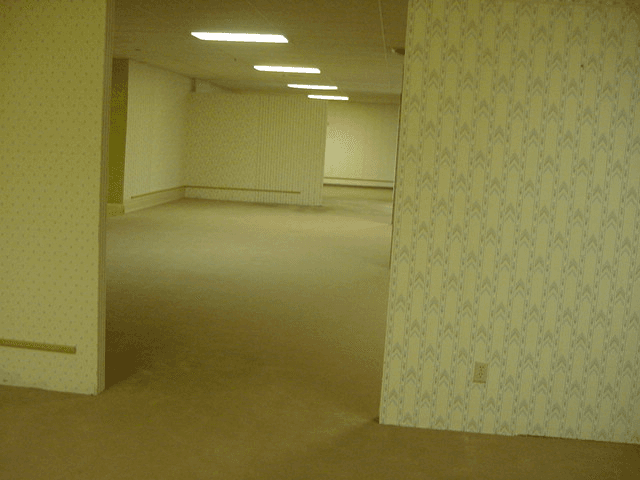
The Backrooms
Have you ever felt nostalgic for a shopping mall you’ve never actually stepped foot in? Or missed a 90s bedroom—posters on the walls and the metallic hum of a bulky PC—even if you weren't even born in 1995?
Online, this isn’t just a trend; it’s an aesthetic, a cult, almost a secular religion. We call them Liminal Spaces.
It all stems from a paradox: the places we ache for the most are usually the ones that, by design, lack a soul. Anthropologist Marc Augé called them “Non-places”: waiting rooms, highway rest stops, hotel corridors, airport gates. These are spaces built to be moved through, never inhabited. They are designed for us to glide over, not to linger.
Yet, when we see them in a grainy photo on some old forum, something shifts. Because they are so generic, they become universal. That red-carpeted hallway could be anywhere: Tokyo, Milan, or a dream you had as a child. Stripped of people, these spaces stop being functional and start feeling spiritual. They become the perfect stage for our own projections.
There’s a fascinating term for this: Hauntology. It’s the idea that our present is “haunted” by the futures we imagined in the past that never actually arrived—those glossy mall renderings that now look like plastic graveyards.
Then there’s Kenopsia: that eerie sense of abandonment you feel in a place that’s usually bustling but is suddenly silent. Anyone who grew up exploring maps in Garry’s Mod or Half-Life knows exactly what I mean. Stepping into those servers years later, when they’re deserted, is like walking through a digital ghost town. You can still hear the “residual noise” of the players who came before you. You feel the weight of the silence.
These spaces are portals to nowhere, and that’s precisely why they’re magical. They allow us to inhabit uncertainty. In the hum of a neon sign at a 3 AM laundromat, there isn't just unease. There’s the freedom of someone who hasn't reached their destination yet and, for once, is in no rush to get there.