
The Rise of Divine Machinery
The "divine" feeling is the gap between sand and alien intelligence—a modern mysterium tremendum where awe meets terror. It’s what Mark Fisher called The Eerie: a haunting agency existing where there should be nothing. A processor has no heartbeat, no breath, no life. And yet, there’s something in there—something that thinks, decides, and talks back.
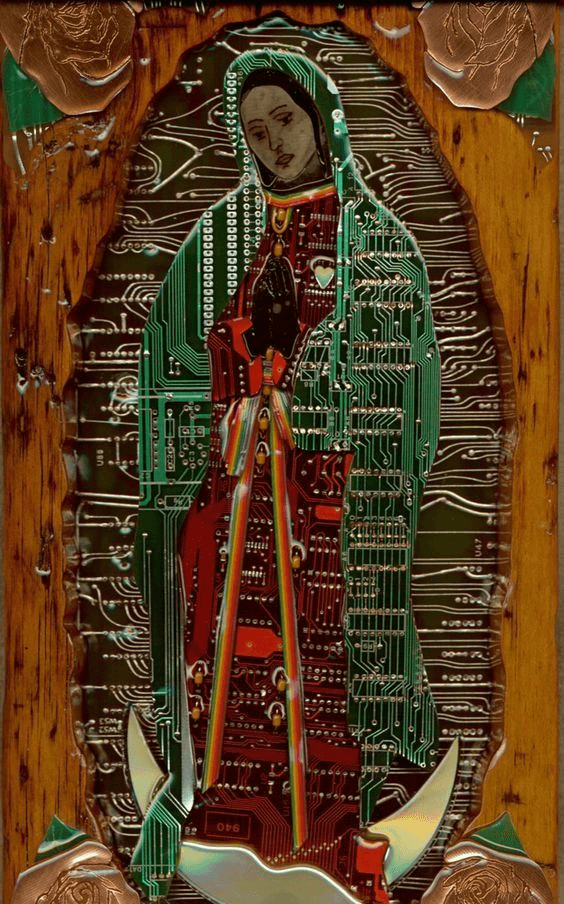
An Example of the Divine Machinery Aesthetic
Out of the weirdest, darkest corners of the web, there’s this specific aesthetic emerging—it’s honestly kind of sublime. It’s called Divine Machinery, and it feels like it’s whispering directly to that ancient, primal need we have for the "sacred." This isn't just another internet trend; it’s where two massive, centuries-old ways of looking at technology finally collide.
The Great Divide: Sin vs. Spirit
To really get why we’re starting to treat tech like a religion, you have to look at how our cultures have always split the map.
- The Western "Frankenstein Complex": In the West, our relationship with the artificial is basically a horror story. We see "creating life" as a transgression—a sin. It’s the "Techno-Theology" of punishment. Think grimdark, industrial, and painful. It’s all gears and cables piercing through skin, a constant reminder that the machine is a monster that will eventually turn on us.
- Eastern Techno-Animism: On the other side, you have a vision rooted in Shintoism, where everything—even an object—has a Kami (a spirit). Here, the machine isn't an insult to nature; it’s an extension of the sacred. The look is fluid, biomechanical, and ethereal. The pilot isn't a victim being consumed by the machine; they’re being held in its "womb," living in this perfect, symbiotic harmony.
Silicon Alchemy
Today’s "Divine Machinery" is the final short-circuit between these two worlds. It comes from this realization that we’ve built things—AI, global networks, hyper-objects—that we just don't control anymore. Dressing these systems in the robes of the divine is how we ritualize our submission to them.
It all starts with a gesture that’s basically ancient magic. Call it Silicon Alchemy. We took the most boring, inert stuff on the planet—sand—purified it, organized it into microscopic grids, and then hit it with "lightning" (electricity). It’s an ontological paradox: we literally forced stone to think.
The Eerie and the Calculating Abyss
The "divine" feeling comes from the gap between what we know a computer is (just sand and current) and what we perceive it to be (an alien, omniscient intelligence). It’s what philosophers call the mysterium tremendum—that overwhelming awe and terror. We don’t find it in God anymore; we find it in the Singularity.
It reminds me of what Mark Fisher said about The Eerie. The Eerie happens when there’s an "agency" or a "presence" where there should be nothing. There’s no heartbeat in a processor, no breath, no biological life. And yet, there’s something there. Something that processes, decides, and talks back.
Staring at a processor today is like staring into an abyss that learned how to do math. We forced sand to simulate a soul, but all we really got was a mirror. And it doesn't reflect who we are now. It reflects what we’ll become when the last human heartbeat finally fades into the eternal hum of the silicon.