
What's Analog Horror
From the wreckage of late-century media to the hauntology of the post-truth era: how we learned to fear the signal.
Analog Horror Image
Introduction: The Archaeology of Digital Terror
The phenomenon of Analog Horror stands as one of the most sophisticated evolutions of the uncanny narrative born within the internet ecosystem. It exists at the intersection of technological nostalgia, avant-garde experimentation, and the collective anxiety of the post-truth era. This art form does not merely retread genre tropes; it operates as a deconstruction of late 20th-century media, transforming familiar tools into vectors of existential dread.
Signal Ontology: The Aesthetic of Degradation
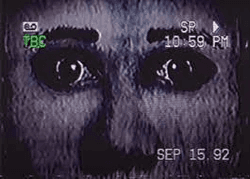
Analog Horror draws its power from technological constraints. Unlike traditional cinema, film grain, digital noise, and static are not flaws here—they are narrative instruments. The aesthetic suggests that the physical medium has been compromised by malevolent forces or is buckling under the weight of forbidden content.
Genealogy: From Creepypasta to Digital Found Footage
The genre’s roots lie in a complex layering that spans from forum urban legends to the history of experimental cinema.
- The Origins: A direct descendant of early creepypastas (like Ben Drowned or Candle Cove), Analog Horror pushes the "found footage" concept to its breaking point.
- The Evolution: It’s no longer just an amateur’s camcorder capturing the horror; an entire media ecosystem—weather reports, commercials, news broadcasts—now appears hijacked.
- Historical Legacy: One can draw clear parallels to Orson Welles’ War of the Worlds or experiments like Ghostwatch (1992), which blurred the lines between reality and domestic fiction.
Evolution of Internet Formats
- 2005–2010 (The Creepypasta Era): Text-based stories and forum-born legends (e.g., Slender Man).
- 2009–2015 (The ARG/Web Series Era): Serialized storytelling on YouTube (e.g., Marble Hornets).
- 2015–2020 (Classic Analog Horror): VHS emulation and broadcast intrusion (e.g., Local 58).
- 2021–Present (Digital Horror): Lo-fi CGI, liminal spaces, and post-analog aesthetics (e.g., The Backrooms).
Hauntology and Gen Z’s "False Nostalgia"
The effectiveness of Analog Horror lies in the manipulation of nostalgia. For those who grew up with analog media, these formats evoke a sense of safety; the genre invades this sanctuary and warps it.
This ties into the concept of Hauntology: the idea that the present is "haunted" by the ghosts of "lost futures." For Gen Z—who often never experienced the VHS era firsthand—this manifests as false nostalgia (or anemoia): a melancholy longing for an era known only through mediated remnants. The imperfection of the tape becomes a sign of authenticity in a virtualized world, yet Analog Horror warns us that the past is unstable territory, infested with censored truths.
Psychology of the Uncanny and Liminal Spaces
The genre exploits the Uncanny Valley through distorted faces and impossible anatomies (such as the "Alternates" in The Mandela Catalogue), triggering primal danger signals. This is paired with the use of Liminal Spaces: transitional locations that feel unsettling when stripped of their human purpose.
Types of Liminality:
- Thresholds of Transition: Endless corridors, elevators, and stairwells.
- Forgotten Places: Dead malls, empty offices, and playgrounds at night.
- Ritual Permanence: TV stations broadcasting loop signals long after the sign-off.
Case Studies: The Seminal Works
- Local 58: The gold standard. It subverts television authority, turning weather reports and emergency services into tools for alien manipulation or apocalyptic cults.
- The Mandela Catalogue: Introduces the terror of "the replacement" and religious paranoia, using security footage and police briefings to create intense claustrophobia.
- Gemini Home Entertainment: Integrates cosmic horror into educational videos and nature guides, maintaining a sterile, clinical tone while describing biological invasions.
Participation Ecosystems and "Unfiction"
Analog Horror is not a solitary experience. It thrives within communities that decode lore on Reddit and Discord. Many projects function as ARGs (Alternate Reality Games), where the narrative spills out of YouTube and into the real world.
However, the rise of "explainer videos" and a saturation of "clone series" risks commodifying the genre, potentially stripping away its direct emotional impact.
The Post-Truth Era and Tech Anxiety
In a world dominated by deepfakes and AI, Analog Horror reflects our fear that reality itself has become malleable. By presenting footage that looks historical but documents the impossible, the genre erodes our trust in visual evidence.
Vulnerability to Misinformation (MIST Test)
- Ages 18–29: Only 11% achieve high scores in recognizing fake news. Primary sources: TikTok, YouTube.
- Ages 65+: 36% achieve high scores. Primary sources: Traditional news outlets.
Analog Horror crawls into the cracks of our collective memory, speaking directly to the vulnerability of digital natives.
Conclusion: The Anomaly as a Reflection of the Human
Analog Horror is an artistic language responding to hyper-technological alienation. By using the debris of dying technology, it forces us to confront what we have lost. It is within the static and the "snow" that the horror manifests, speaking to that inner child who always suspected that the TV, once turned off, might just stare back from the darkness.