
The MSN era
Before the internet followed us into our pockets, it was a destination—a physical place we visited at the end of a wooden desk. This is a souvenir from the era of noisy modems and ASCII graffiti, a time when being 'online' was a ritual, not a constant state of being.
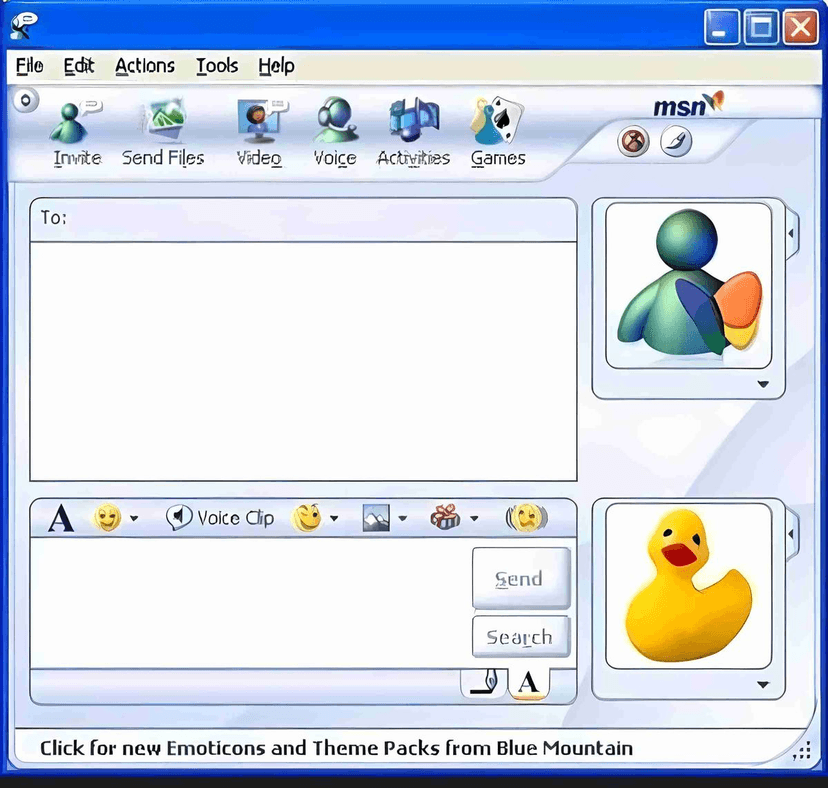
Msn Screenshot
There was a time when the internet didn’t follow us into our pockets. It didn’t hover over our dinners or vibrate against our thighs while we slept. It was a physical destination—a tangle of beige cables, heavy monitors, and the distinct, warm smell of heated plastic. To "go online" was a deliberate act of migration. You’d sit at a wooden desk, wait for the mechanical scream of the modem to subside, and cross a threshold into a world that only existed as long as you remained in that chair.
Today, we are permanently fused with the network. But as we drown in the clinical, algorithmic perfection of modern platforms, a specific kind of nostalgia is bubbling up from the archives. We’re looking back at the messy, loud, and tactile "manual era" of the web—not just because we miss our youth, but because we miss the freedom of being unpolished.
ASCII Graffiti and the Art of the Mess
In the early 2000s, our digital identities weren't curated by professional photographers or engagement metrics. They were built from the ground up using ASCII symbols, chaotic square brackets, and nicknames that bordered on the unreadable.
These weren't just handles; they were digital monuments. We claimed space through visual noise, crafting personas that were deliberately cluttered. Unlike the "clean" profiles of today that demand high-definition consistency, the MSN era allowed us to be a work in progress—a shifting mosaic of low-res GIFs and saturated colors that felt more like graffiti than a resume.
The Theater of Being Online
Socializing back then was a performance of "vibrant stasis." We spent hours connected without saying anything of substance. We inhabited a shared silence, occasionally broken by the violent rattle of a "Nudge" or the tactical dance of toggling between Invisible and Online.
This was the original "tactical like." It was a way of knocking on someone’s door without saying a word, a game of digital eye contact that felt thrillingly high-stakes. It was a slow kind of social media—one where the pleasure wasn't in the content you consumed, but in the simple, shared knowledge that you were both "there," occupying the same corner of the electric dawn.
Frutiger Aero and the Dream of Glass
This craving for the past is manifesting today as the Y2K Revival and the obsession with Frutiger Aero. We’re suddenly nostalgic for interfaces that looked like soap bubbles, glass, and water.
There’s a reason for this: those designs felt tangible. They promised a future that was optimistic, physical, and reassuringly three-dimensional. Compared to the flat, sterile, and "invisible" interfaces of the 2020s, the aesthetics of the mid-2000s felt like objects you could touch. We’re chasing that chaos and that "crunchy" low-res texture because we’re tired of the sanitized, hyper-optimized cage that the modern web has become.
The Luxury of the "Off" Switch
Perhaps the most precious thing we lost wasn't the software, but the boundary.
When you hit "shut down" in 2005, the virtual world stayed in the room you left behind. That separation made our digital interactions feel like precious souvenirs. You had to wait until the next day to pick up the thread of a conversation, and that waiting period transformed a simple chat into a genuine connection.
The internet used to be an intermission from life, a place we visited to find the weird, the messy, and the authentic. MSN was the last place where we went looking for the web, before the web started looking for us. As we look at those old, pixelated screenshots, they feel less like tech artifacts and more like old Polaroids—witnesses to a time when we had the freedom to be disordered, and the ultimate luxury of simply disappearing.