
The GeoCities Era
Before we traded creative chaos for the tyranny of the infinite scroll, the web wasn't a service—it was a place we actually lived in.
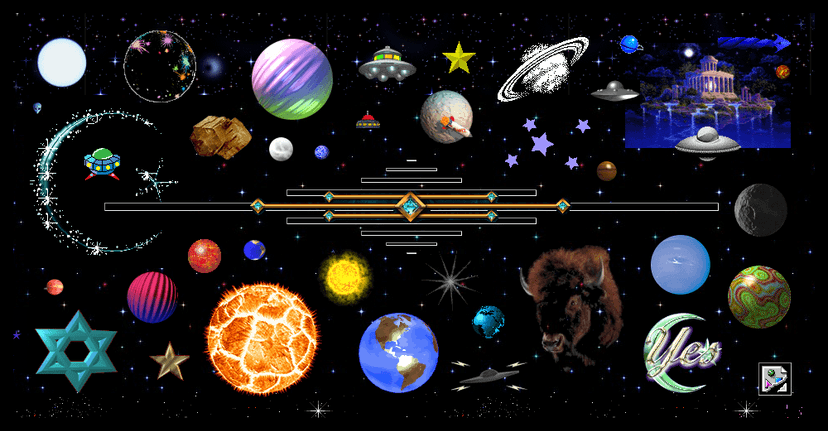
Cameron’s World Screenshot: A GeoCities-era Archive
Buried beneath the sediment of algorithmic feeds and the sterile interfaces of Web 2.0 lies the "Cambrian Period" of the World Wide Web: the GeoCities era (1994–2009). It was a moment of pure creative explosion, a time when cyberspace wasn't just a utility, but a destination.
In 1994, when the web was still a barren wilderness reserved for academics, David Bohnett and John Rezner had a breakthrough: the digital world needed to be democratized through the metaphor of the "home." First came Beverly Hills Internet, then came GeoCities.
Unlike today’s users, who are essentially "precarious tenants" on someone else's platform, GeoCities users were Homesteaders. The platform didn't just hand you a profile; it gave you a residence in a themed neighborhood.
The fundamental difference between GeoCities and the modern web lies in finitude. Today, we live under the "tyranny of the infinite scroll." Platforms like TikTok and Instagram are designed as Möbius strips—loops with no end.
On GeoCities, a website was a discrete object. It had a beginning, a middle, and a physical conclusion. This sense of finitude was enforced by brutal technical limitations: storage space (often capped at 15MB) and time (the crawl of a 56k modem). The Guestbook was the final seal; signing it was a way of saying: "I visited your home, I saw it all, and now I’m leaving." It offered a sense of digital peace that has since been replaced by the constant anxiety of the refresh button.
The death of GeoCities was our digital Pompeii: 38 million pages wiped away, marking the definitive shift from the web as a "home" to the web as a "service." While we now live confined within algorithmic feeds where every aesthetic is a preset, that old chaos of GIFs and neon colors was an act of pure autonomy.
Projects like Cameron’s World or the work of Olia Lialina aren't just fueled by nostalgia; they are proof that the early web was authentic folklore—handmade and resistant to standardization. The current rise of Neo-Brutalism suggests a deep-seated fatigue with the sterile perfection of modern socials. We are once again seeking that "friction" and that sense of belonging that only a place you inhabit, rather than just scroll through, can provide.
We traded our creative freedom for algorithmic convenience. But the ghost of GeoCities reminds us that the internet was born to be a collective masterpiece, not a cookie-cutter digital mall.