
The Dead Internet Theory : Why the Internet Feels Like a Ghost Town
We have officially entered the era of the "Post-Human Web." Between AI slop, bot swarms, and the rise of Dark Social, the digital world is undergoing a metamorphosis that leaves the individual behind.
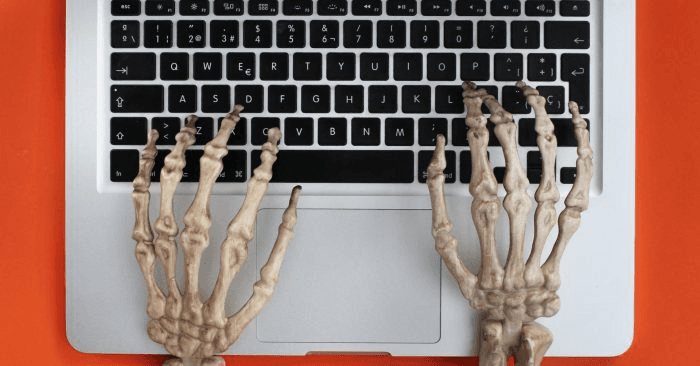
The Dead Internet Theory
For anyone who spent their formative years navigating the chaotic, DIY glory of the early 2000s web, the modern internet feels fundamentally wrong. It’s not just the ads or the trackers; it’s an atmospheric shift. Despite the billions of active users and the endless stream of content, there is a pervasive sense of hollowness.
This isn't just nostalgia—it’s the Dead Internet Theory moving from the realm of "creepy-pasta" folklore into the status of a cold, empirical reality.
The Year the Square Went Quiet
The theory suggests that sometime between 2016 and 2017, the internet as we knew it—a decentralized town square for human expression—was effectively "killed." It was replaced by a sophisticated, algorithmic playground designed to curate perception and manufacture consent.
In this new ecosystem, the "user" is no longer the protagonist. We have become the background noise for a much larger conversation happening between machines. By 2024, we officially crossed the Rubicon: Over 51% of all internet traffic is now generated by bots. For the first time in history, humans are the minority in the digital world they created. We are living in a house where the furniture talks to the walls, and we’re just there to pay the rent.
The Rise of "AI Slop" and the Shrimp Jesus Phenomenon
If you’ve spent any time on legacy social media lately, you’ve seen it: the "AI Slop." It’s the digital muck that clogs our feeds—hyper-realistic but nonsensical images of "Shrimp Jesus," centenarians celebrating their 110th birthdays for the fifth time this week, or bizarre, colorful landscapes that serve no purpose other than to farm engagement.
This is the front line of the Dead Internet. These images aren't meant to be "art"; they are bait. They are designed to trigger bot swarms that comment "Amen" or "Beautiful" in a closed loop, inflating metrics and tricking algorithms into thinking the content is relevant. This creates a feedback loop of synthetic junk that drowns out actual human creativity. When the distinction between a pixel and a heartbeat vanishes, trust—the very currency of the internet—craters.
The Dehumanization of the Creator
The tragedy isn’t just that the bots are acting like us; it’s that we are starting to act like the bots. To survive in an era of algorithmic dominance, human creators are forced into a state of "NPC-ification." They follow rigid scripts, use "algorithm-friendly" keywords, and suppress their own spontaneity to avoid being buried by the code. We are witnessing the death of the "Archivist of the Present"—the curator who finds signals in the noise—replaced by the "Content Farm," which produces noise to satisfy the signal.
The New Borders: Proof of Personhood vs. Dark Social
As the public web becomes a "synthetic desert," two distinct solutions are emerging.
- The Technological Fortress (Proof of Personhood): From iris scans to decentralized digital IDs, there is a growing movement to "verify" humanity. The goal is to build a wall that machine hallucinations cannot climb. It’s a desperate attempt to bring authenticity back through the very technology that eroded it.
- The Cultural Bunker (Dark Social): The most significant shift, however, is human. People are abandoning the "Big Social" platforms—the noisy, bot-infested squares—and retreating into "Dark Social." Telegram channels, private Discord servers, and invite-only Signal groups are the new digital bunkers. This is where the real conversation is happening, protected by the only thing a bot can't fake: a genuine, pre-existing relationship.
The Final Choice: Data Point or Protagonist?
The internet we knew might be dead, but human connection isn't. The challenge of the next decade won't be about "fixing" the web; it will be about deciding where we choose to exist within it.
We can remain spectators of a digital hallucination, endlessly scrolling through a cycle of ads and automated "slop," or we can reclaim our status as protagonists. The future belongs to those who prioritize the authentic over the optimized. In a world of infinite pixels, the most radical thing you can do is remain human.