
The Charm of Old AI Art
We’re already nostalgic for 2022. This exploration dives into the uncanny yet endearing charm of early generative AI: an era of melted faces, grainy textures, and "mistakes" that somehow feel more human than today’s perfection.
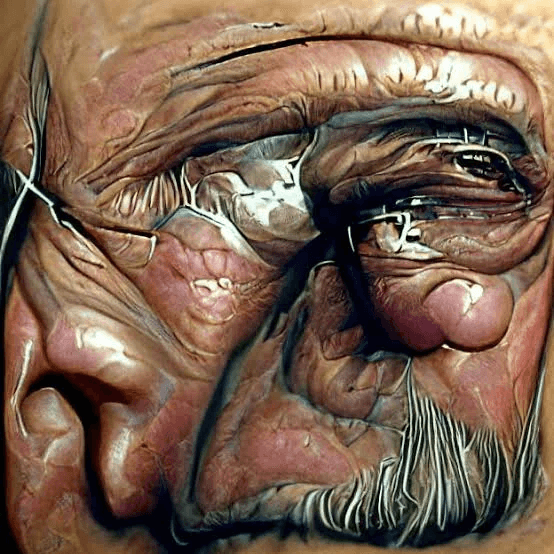
Example of old Ai Generated Media
Digital Ruins: The Haunting Nostalgia of "Old AI Art"
In the analog world, "vintage" is a status earned through decades of dust and decay. In the realm of artificial intelligence, three years is an eternity. We are currently witnessing the birth of a new kind of digital archaeology: Old AI Art. We now look back at images produced in 2022 with the same melancholic distance our parents reserved for grainy 35mm slides from the 1970s.
This burgeoning subgenre celebrates the primal hallucinations, the anatomical glitches, and the "dirty" textures that today’s ultra-realistic models have fought so hard to erase. But why are we already nostalgic for a technology that is barely out of its infancy?
1. The Rebellion Against "The Slop"
We are currently drowning in "AI Slop"—hyper-defined, polished, and often soulless generative content designed to flood social feeds with corporate perfection. In the face of this sterile, industrial beauty, Old AI Art (think DALL-E Mini/Craiyon or the earliest iterations of Stable Diffusion) feels paradoxically more authentic.
These early images weren’t trying to trick the eye. They were "honest" in their failure. The heavy grain, the digital artifacts, and the washed-out palettes remind us that we are peering into the brain of a machine still learning how to dream. It is the pursuit of the "beautiful mistake"—an aesthetic that prioritizes visual "noise" over the sterile boredom of photorealism.
2. Dream Logic: When the Machine Hallucinates
Early AI models had no concept of what a face was, or how many fingers belonged on a hand. The result was a form of pure dream logic.
"Old AI Art doesn't reproduce reality; it reproduces the way a machine misunderstands it."
This aesthetic aligns perfectly with internet subcultures like Dreamcore or Liminal Spaces. In these images, objects melt into one another, perspectives defy physics, and textures feel simultaneously organic and alien. It is an involuntary surrealism that no human artist could replicate with the same unsettling precision.
3. The Paradox: Creepy vs. Cute
Old AI Art triggers a unique aesthetic duality, pulling us between two visceral extremes:
The Uncanny (The Creepy)
The horror of early AI is biological horror. Seeing "melted" facial features or bodies warping into formless masses evokes the visceral body-horror of Francis Bacon. This is the "ghost in the machine"—the feeling that something sentient is desperately trying to appear human and failing in a way that feels fundamentally wrong.
The Naivety (The Cute)
Yet, there is an almost infantile naivety to it. Looking at a 2022-era image of a "cat eating spaghetti" feels like looking at a child’s drawing. It is a clumsy, lo-fi attempt that carries a "cozy" soul. It possesses an earnestness that modern, high-definition models—ready-made for marketing and stock photography—have lost entirely.