
The Architecture of Digital Zen
How the technical limits of the PS2 era created "social deserts"—empty, sun-drenched beaches that became the ultimate refuge from a hyper-connected world.
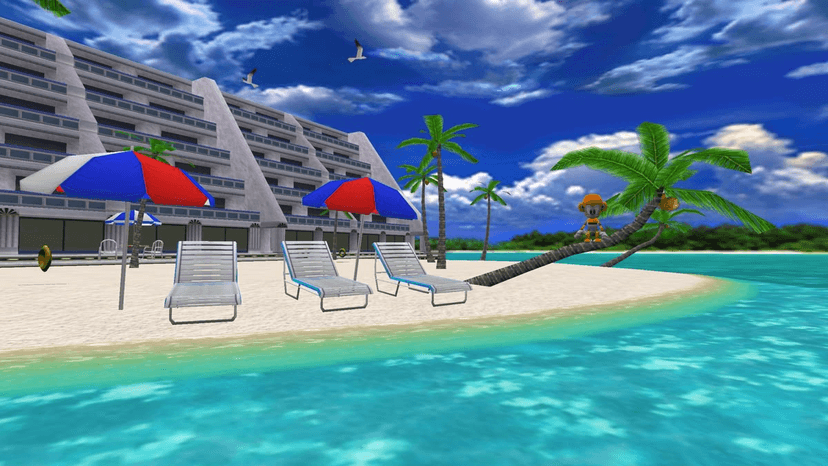
Sonic Adventure
You know that specific, slightly unsettling feeling you get when you look back at the water in Final Fantasy X or the shores of Super Mario Sunshine? It’s not just nostalgia for afternoons spent in front of a CRT TV. It’s something more physical: a sense of absolute peace that, if you stare at it long enough, starts to feel a bit eerie.
Between 2000 and 2005—the golden age of the PS2, GameCube, and the original Xbox—gaming was basically obsessed with the tropics. But we weren’t looking for realism. We were immersed in what you could call an "Archipelago of Silence," a world built of pixels and elective solitude.
Today, games are bursting with life: NPCs chatting, birds flying, dynamic events everywhere. Back in 2002, the tech just wasn't there. If you wanted to render a semi-believable ocean on a PS2, you had to sacrifice everything else. The result? Empty beaches. Places like Besaid or the Destiny Islands were, technically speaking, social deserts.
This "emptiness," which was really just a limitation of the RAM, accidentally became a form of Digital Zen. Without crowds of secondary characters cluttering the frame, the space became yours. It was a chosen solitude—a refuge where the only sound was the white noise of the waves, usually a short audio loop that ended up hypnotizing you.
Then there was the aesthetic of that era: Frutiger Aero. It was all about saturated blue skies, neon-green grass, and water so clear it looked like glass. It captured a moment of pure technological optimism; we really thought the future would be that clean, organic, and transparent. On those beaches, time is frozen in a perpetual 2:00 PM summer. There’s no winter, no darkness. That predictability is exactly what makes them feel safe.
Maybe the reason we miss those shores so much is that they were offline. Today, even when we play alone, we’re surrounded by notifications, trophy pops, social feeds, and matchmaking prompts. The gaming beach of 2003 was a "secret garden." No one could break into your world.
When we look at those games now—or hunt for "Liminal Spaces" on YouTube—we’re just trying to get back to that specific afternoon twenty years ago. The blinds drawn, fingers greasy from a bag of chips, and that cobalt blue sea glowing inside a seventy-pound glass box.